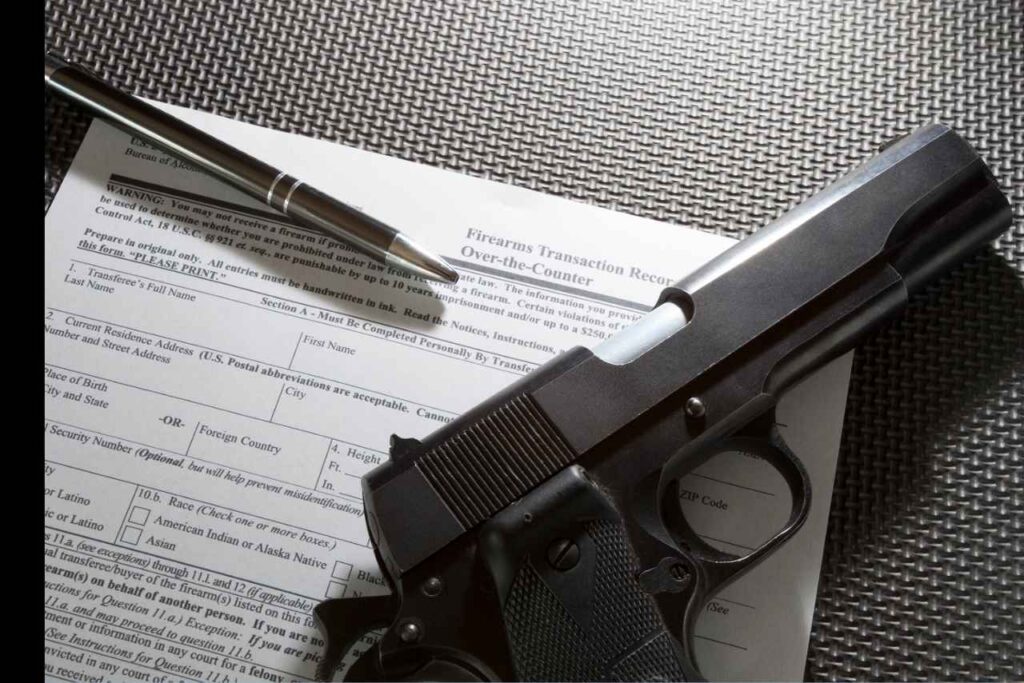
In a 6-1 decision in State v. Heffley, the Ohio Supreme Court ruled that Ohio trial courts may consider applications to restore firearm rights to individuals barred by criminal convictions under federal law. The June 2 ruling revives the firearm restoration rights of an Allen County man convicted of felony domestic violence nearly two decades ago.
For the rest of Ohio, it means that even as the federal ban remains in effect, those with domestic violence convictions may now begin the process of having their gun rights reinstated if both the state and federal prohibitions stem from the same Ohio felony conviction.
Advocates for domestic violence survivors say the decision leaves Ohio judges with an important responsibility. Maria York, director of policy and communications for the Ohio Domestic Violence Network, said the ruling “clarified the process but did not determine the outcome in restoration cases.”
“We hope lower courts will listen to the safety concerns raised by survivors when they exercise that discretion,” York said.
In the network’s most recent fatality report, York said 3 out of every 4 domestic violence deaths in Ohio involved a gun. Nearly 2 out of 3 killers had a criminal history.
“Guns in the hands of offenders are a huge risk,” York said. “ODVN will continue to raise awareness about how access to guns heightens lethal risk for survivors, their children, and offenders, because we know disarming dangerous offenders saves lives.”
A Felony Conviction and Request to Rearm
At the center of this case is Patrick Heffley of Allen County. He was convicted of felony domestic violence in 2006. After completing his sentence, paying court costs, and finishing parole without additional incidents, Heffley filed an application in 2023 seeking restoration of his firearm rights under Ohio law.
An Allen County judge denied Heffley’s petition, citing the ongoing federal prohibition on firearm possession as a bar to restoring his state firearm rights. Heffley faced a circular trap: under federal law, this restriction is typically lifted only after a state court restores the individual’s rights.
Justice R. Patrick DeWine, writing for the majority, said Heffley was “trapped in the quandary of the trial court’s logic” when it determined the state ban could not be lifted due to the federal ban. He explained that “otherwise” in the statute means “in a different way or manner” and that interpreting the federal ban independently created an inescapable circle.
“In this case, Heffley’s state and federal firearms disabilities arise from a single state conviction – his 2006 domestic-violence conviction – which is the subject of his application for relief,” DeWine wrote. “Heffley has only one disabling conviction. He is not otherwise prohibited by law from having a firearm.”
The Supreme Court sent the case back to Allen County to decide if Heffley has shown he can safely have a firearm by examining the totality of his case-specific circumstances, including his behavior post-conviction. Factors include statutory requirements, the nature of the original offense, time elapsed, public safety risks, and community standing.
No Automatic Restoration of Gun Rights
The Supreme Court’s decision does not automatically restore Heffley’s firearm rights. Nor does it immediately change the gun rights of others with similar convictions. The ruling allows local judges to consider restoration applications on a case-by-case basis. Trial courts can hear evidence of character references, stable employment, and lack of further criminal behavior when evaluating these applications, using their discretion to balance safety risks with the restriction on an applicant’s gun rights.
Justice Jennifer Brunner used strong language in her dissent, arguing that the statute’s plain language treats the federal prohibition as a barrier that must be removed first. She accused the majority of “[engaging] in results-oriented jurisprudence, potentially harming people whom the law is designed to protect,” and warned of the dangers of allowing felony domestic violence offenders to be relieved of gun restrictions.
Balancing Second Amendment Rights With Surivors’ Safety
Rachel Lovell, director of the Criminology Research Center at Cleveland State University, said at the very least, victims should have a voice in those proceedings. Otherwise, judges may miss the full extent of domestic violence history that never made it into the court record: police calls resolved without an arrest, charges pleaded down, or the troubling specifics of incidents that were never officially reported.
“Having the victims have an opportunity to provide consultation or voice some aspect like their victim impact statement would be really important,” Lovell said.
A criminologist and policy adviser who specializes in intimate partner violence and gun violence, Lovell also emphasized the importance of risk assessment when evaluating these cases. Law enforcement and probation officers already use established frameworks to assess lethality risks and the potential for further offenses.
To better protect victims after Heffley, Lovell suggested requiring judges weighing firearm restoration petitions to review these same reports.