
Ohio legalized adult-use marijuana in December 2023. Three years later, courts still can’t agree on what the smell of it means during a traffic stop. Now, the Ohio Supreme Court will settle the split.
The disagreement over whether the odor of burnt marijuana itself is enough to justify a warrantless car search stems from conflicting rulings from the First and Ninth District Courts of Appeals.
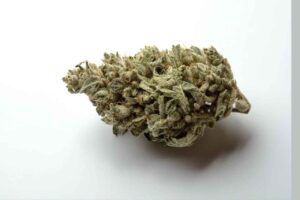
A traffic stop can begin with something as ordinary as speeding or a wrong turn. For decades during marijuana prohibition, the smell of it alone, detected by a trained officer, could establish probable cause to search the vehicle. Now that marijuana is legal, the question is whether that’s still a basis for an expanded search. In State v. Dejournett and State v. Gray, two Ohio courts have reached different conclusions.
The Constitutional Question
The Fourth Amendment protects people from unreasonable searches and seizures. While police generally need a warrant to search someone’s property, there are exceptions. One of those exceptions, established in Carroll v. United States, applies to vehicles.
Known as the automobile exception, this rule allows police to search a vehicle without a warrant if they have probable cause to believe it contains contraband or evidence of a crime. In other words, officers must have a reasonable basis to believe that evidence of criminal activity will be found inside. Carroll v. United States, 267 U.S. 132, 149 (1925). The question now before the Ohio Supreme Court is whether the smell of burnt marijuana, standing alone, is enough to meet that standard.
The First District’s decision in State v. Gray
In State v. Gray, following Ohio’s legalization of adult-use marijuana, the First District Court of Appeals considered whether the smell of marijuana provided probable cause to search a car pursuant to the automobile exception. State v. Gray, 2025-Ohio-4607, ¶ 1 (1st Dist.).
The case began when police stopped Gray’s vehicle after discovering an outstanding warrant associated with it. Id. at ¶ 4. During the stop, an officer smelled marijuana. Gray told police he had “cotty,” or a burnt end of a marijuana blunt, inside the vehicle. Id. at ¶ 10. The officer testified that she believed the search was justified because marijuana was not permitted in a vehicle and because officers believed Gray might be carrying a weapon. Id. at ¶ 15.
However, there was no evidence that prior to the search Gray was impaired, had smoked marijuana inside the vehicle, or possessed more marijuana than the law allowed. Gray challenged the search, arguing that the officer did not have sufficient grounds to conduct it. Id. at ¶¶ 42–43.
The First District recognized that the smell of marijuana can still be considered when determining probable cause. But the court explained that the odor alone does not necessarily mean a crime has occurred. Id. at ¶ 61.
The court pointed to other circumstances that could support probable cause, such as smoke coming from the vehicle or signs that the driver was impaired. Without additional evidence, the smell of marijuana doesn’t automatically establish that someone has broken the law. Id. at ¶ 62.
At the heart of the decision was a distinction between the presence of marijuana and evidence of criminal activity. Although Gray admitted to possessing a burnt marijuana blunt, the court explained that possession was lawful under the circumstances, and there was no evidence that he possessed more than the legally permitted amount. Accordingly, the odor and Gray’s admission, considered together, did not establish probable cause to search the vehicle. Id. at ¶¶ 61–63.
Months later, another appellate court reached the opposite conclusion.
The Ninth District’s decision in State v. Dejournett
In State v. Dejournett, the Ninth District Court of Appeals took up a similar question. The case involved Scott Dejournett, who was pulled over by an Akron police officer for speeding on March 23, 2024. State v. Dejournett, 2026-Ohio-640, ¶ 2 (9th Dist.).
According to the court’s opinion, the officer, who was trained in drug detection, smelled burnt marijuana coming from the vehicle. However, the officer did not see Dejournett smoking marijuana or observe any burnt marijuana inside the car. A subsequent search uncovered a firearm and a bag of raw marijuana, but no burnt marijuana was found. Id. at ¶ 2.
Dejournett challenged the search, arguing that the smell of marijuana alone did not give the officer probable cause, particularly because Ohio had legalized adult-use marijuana. Id. at ¶ 2.
The Ninth District disagreed and upheld the trial court’s decision. Relying on existing precedent, including State v. Moore, the court concluded that the smell of burnt marijuana was enough to establish probable cause to search the vehicle. Id. at ¶ 8.
The decision was not unanimous. Judge Lanzinger dissented, reasoning that Ohio’s legalization of adult-use marijuana changed the probable-cause analysis. The decision in the case at the core of the majority’s analysis, State v. Moore, was issued before legalization. Therefore, in her view, the smell of burnt marijuana, without additional evidence, was not enough to justify a warrantless search. Id. at ¶¶ 18–19.
The Ninth District’s decision directly conflicted with the First District’s ruling in Gray, setting up a certified conflict that would bring the issue before the Ohio Supreme Court.
Why the conflict matters
The two decisions are significant because they show how differently Ohio appellate courts are interpreting the effect of marijuana legalization on probable cause.
In Gray, the First District recognized that the smell or presence of marijuana does not necessarily mean someone has broken the law. Gray, 2025-Ohio-4607, ¶ 61. The Ninth District took a different approach in Dejournett, relying on the fact that, at the time of the traffic stop, smoking marijuana in a vehicle was prohibited under former R.C. 3780.36(D)(2) and that the odor of burnt marijuana has traditionally been treated as evidence supporting probable cause. Dejournett, 2026-Ohio-640, ¶ 8.
The distinction between burnt and unburnt marijuana is important. The smell of burnt marijuana may suggest that someone recently smoked it, while the presence of unburnt marijuana may simply indicate possession, which can be legal under certain circumstances. The question is whether the smell alone gives police enough reason to believe a crime has occurred and justify a warrantless search.
Arguments before the Ohio Supreme Court
In Dejournett’s reply brief before the Ohio Supreme Court, he argues the smell of burnt marijuana may give an officer reason to investigate further, but it does not, by itself, justify a warrantless vehicle search. Scott Dejournett’s Reply Brief at 9, State v. Dejournett, Nos. 2026-0456 & 2026-0647 (Ohio Oct. 19, 2026) [hereinafter Dejournett Reply Br.].
Dejournett also raises a separate argument involving the automobile exception, relying on a more recent appellate decision, State v. Sawyer. In Sawyer, police stopped a wrong-way driver. Unlike in Gray, officers smelled burnt marijuana, saw a burnt marijuana roach and an ashtray in the vehicle, and the driver, Sawyer, admitted he had smoked marijuana hours earlier. Based on the totality of the circumstances, the court found probable cause to believe Sawyer smoked marijuana in the vehicle and had driven intoxicated. State v. Sawyer, 2026-Ohio-2913, ¶¶ 17–21 (1st Dist.).
Dejournett’s argument relies on another aspect of Sawyer: the scope of a vehicle search under the automobile exception. The court explained that even if the smell of marijuana gives police probable cause to believe someone smoked inside a vehicle, officers must still have reason to believe evidence of that offense will be found in the areas they want to search. Put simply, believing a crime occurred does not automatically give police the authority to search an entire vehicle for evidence of it. Id. at ¶ 22.
Dejournett argues that other circumstances could help establish probable cause, such as smoke coming from the vehicle and a burnt marijuana cigarette in plain view. He maintains, however, that the smell alone does not tell officers when or where marijuana was smoked or who smoked it. Dejournett Reply Br. at 2.
The State takes a different position in its brief. It argues Ohio’s decision to legalize adult-use marijuana did not change the fact that smoking marijuana inside a vehicle remains illegal. According to the State, when an officer smells burnt marijuana coming from a vehicle during a lawful traffic stop, that odor is enough to establish probable cause that the driver violated former R.C. 3780.36(D)(2), which prohibited marijuana use in a motor vehicle. The State insists this approach is consistent with the Fourth Amendment and helps protect roadway safety. Merit Brief of Appellee State of Ohio at 22, State v. Dejournett, Nos. 2026-0456 & 2026-0647 (Ohio Sept. 29, 2026) [hereinafter State’s Merit Br.].
Ultimately, the dispute goes beyond marijuana legality. The question is whether the smell of a substance that can now be legally possessed is enough, by itself, to establish probable cause that someone has broken the law. It also raises a separate question: even if the odor suggests an offense occurred, does it give police sufficient reason to believe evidence of that offense will still be found inside the vehicle?
Cannabis industry raises concerns
In an amicus curiae brief in support of Dejournett, the Ohio Cannabis Coalition argues that the outcome could have consequences for Ohio’s regulated marijuana industry. Brief of Amicus Curiae Ohio Cannabis Coalition Urging Reversal in Support of Appellant Scott Dejournett at 1, State v. Dejournett, Nos. 2026-0456 & 2026-0647 (Ohio Aug. 10, 2026) [hereinafter OHCANN Amicus Br.].
The Coalition represents licensed medical and adult-use marijuana businesses, along with related service providers. OHCANN Amicus Br. at 1. In its brief, it points out that employees working in cultivation, processing, retail and testing facilities can carry the smell of marijuana on their bodies simply because of their jobs. OHCANN Amicus Br. at 5.
“Detectable odor on an employee’s clothing, hair, and skin is an unavoidable incident of lawful employment,” the organization wrote. OHCANN Amicus Br. at 1.
The Coalition compares this to other occupations where employees may carry the smell of their workplace, such as restaurants and bars. Its argument is that the smell of a legally regulated product should not automatically be treated as evidence of criminal activity. OHCANN Amicus Br. at 10.
The brief also highlights the industry’s economic impact, noting that Ohio’s medical and adult-use marijuana markets generated more than $1 billion in combined sales in 2025 and support thousands of jobs. OHCANN Amicus Br. at 2.
The Coalition warns that allowing marijuana odor alone to establish probable cause could leave lawful cannabis industry employees subject to warrantless vehicle searches, even when they have done nothing illegal. OHCANN Amicus Br. at 5.
What comes next?
The Ohio Supreme Court will decide whether the smell of burnt marijuana, without any additional evidence, gives police probable cause to search a vehicle under the automobile exception. Its ruling could change how Ohio courts approach marijuana-related vehicle searches following the legalization of adult-use marijuana.
Oral arguments in Dejournett are scheduled for January 27, 2027. Until the court issues its decision, law enforcement and courts across Ohio must navigate conflicting interpretations of what marijuana odor means during a traffic stop.